100 JAHRE MILITÄRGESCHICHTE
Spuren des Kalten Krieges im schwedischen Nordland
Zweiter Weltkrieg
Schweden bewahrt eine bewaffnete Neutralität. Militärplaner erkennen die Verwundbarkeit des Hafens von Töre — Schwedens nördlichster Tiefwasserhafen.
Baubeginn
In absoluter Geheimhaltung beginnen schwedische Militäringenieure mit den Sprengungen im Berg Hömyrberg. Die Arbeiter werden zur Verschwiegenheit verpflichtet.
Festung wird betriebsbereit
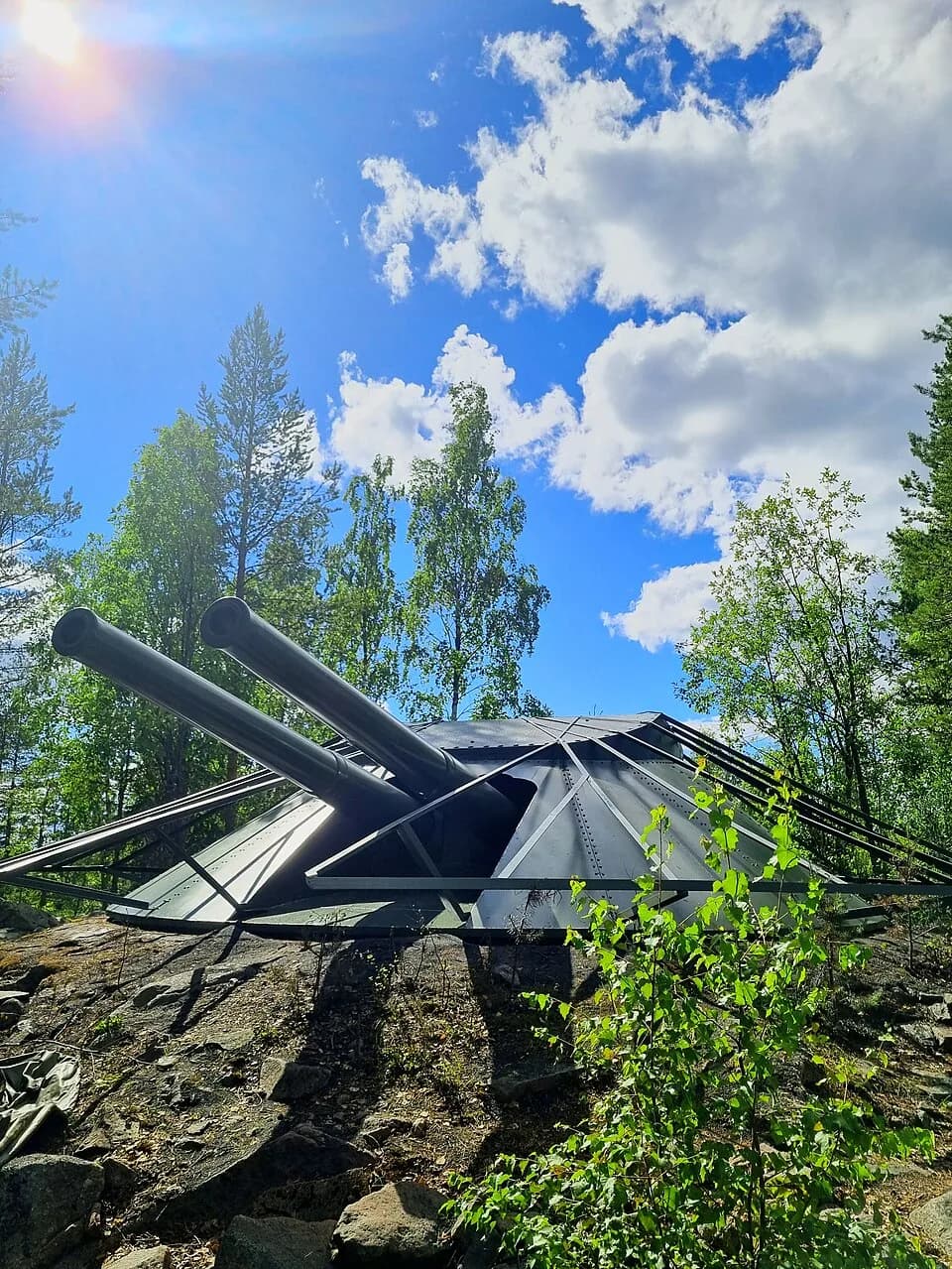
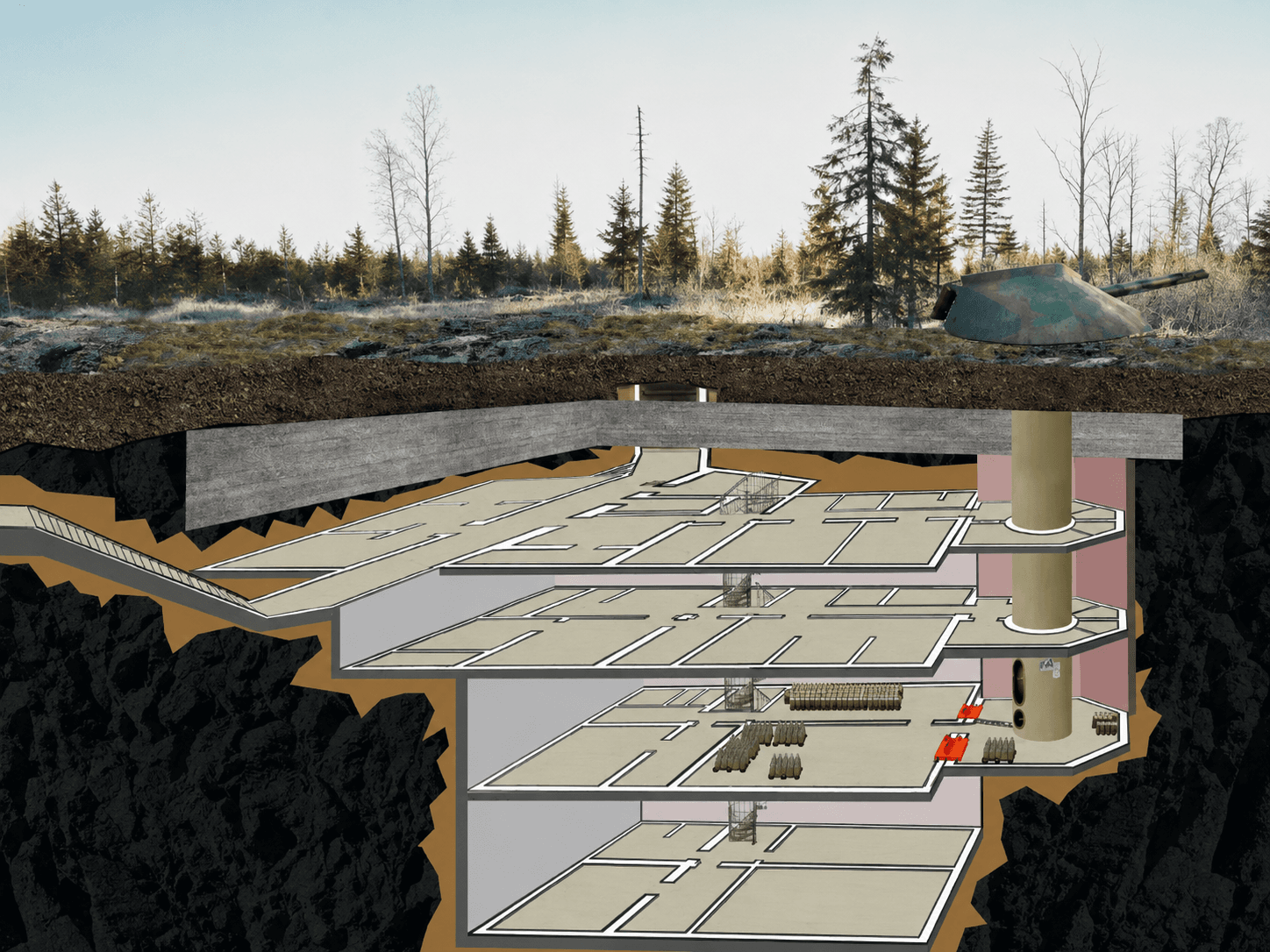
Vier komplette unterirdische Ebenen aus massivem Fels gehauen. Die Festung wird als autarke Anlage in Betrieb genommen, bewaffnet mit 15,2-cm-Kanonen der HMS Fylgia.
Erste U-Boot-Jagd
Schwedische Seestreitkräfte entdecken vermutete ausländische U-Boot-Aktivitäten im Kalix-Archipel. Eine massive U-Boot-Jagd wird eingeleitet.
Zweite U-Boot-Jagd
Der Vorfall wiederholt sich — einer der dramatischsten Momente der Spannungen im Kalten Krieg in der nordischen Region.
HMS Spiggen II gebaut
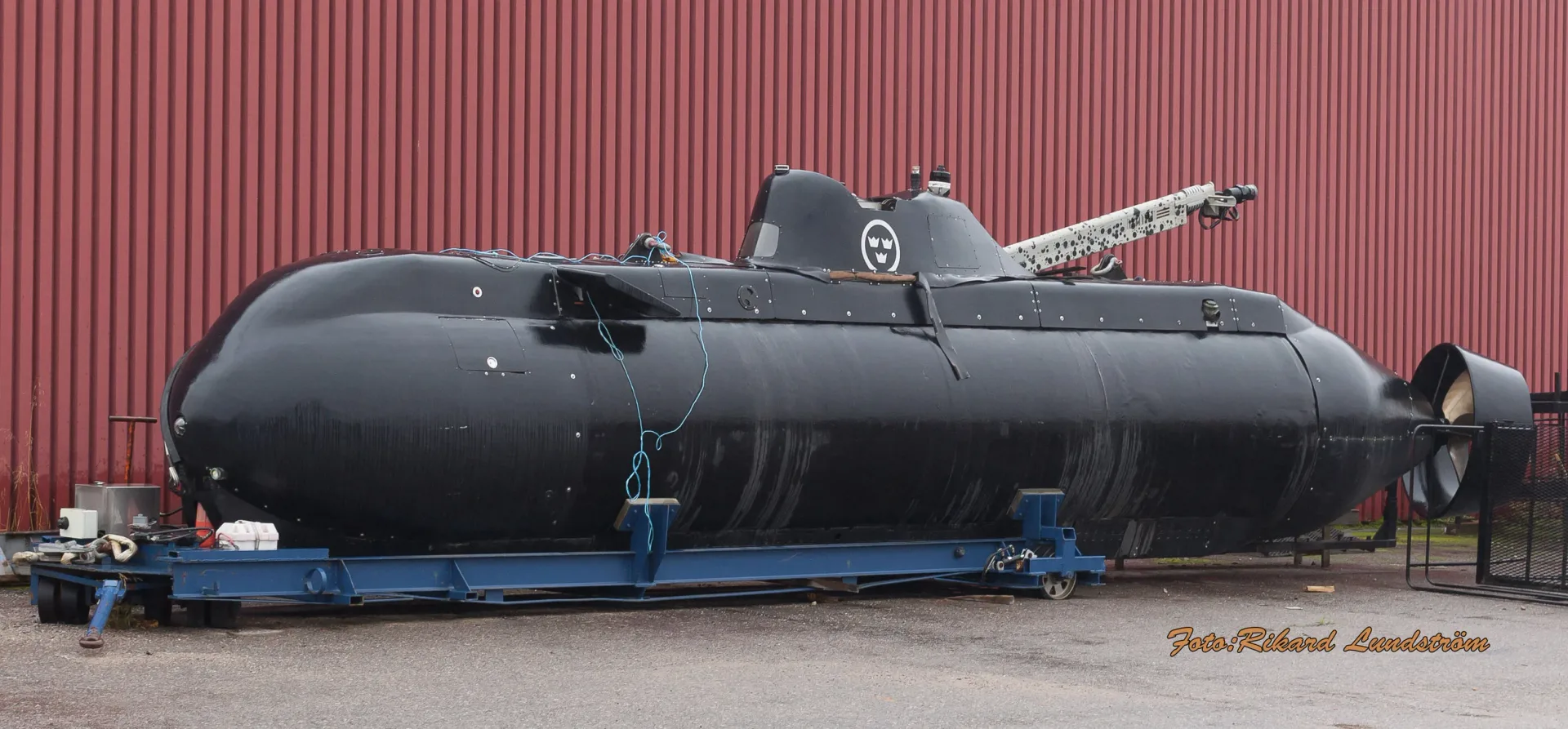
Schwedens einziges im Inland gebautes Mini-U-Boot. 11 Meter lang, für U-Boot-Jagdübungen eingesetzt.
Festung außer Dienst gestellt
Mit dem Ende des Kalten Krieges und sich ändernden Verteidigungsprioritäten wird die Festung nach über 40 Dienstjahren außer Dienst gestellt.
Museum gegründet
Die Stiftung Stiftelsen Siknäsfortet wird gegründet, um die Festung als Museum zu erhalten und das Wissen über die Kalix-Linie zu vertiefen.
KI-Guide Stig gestartet
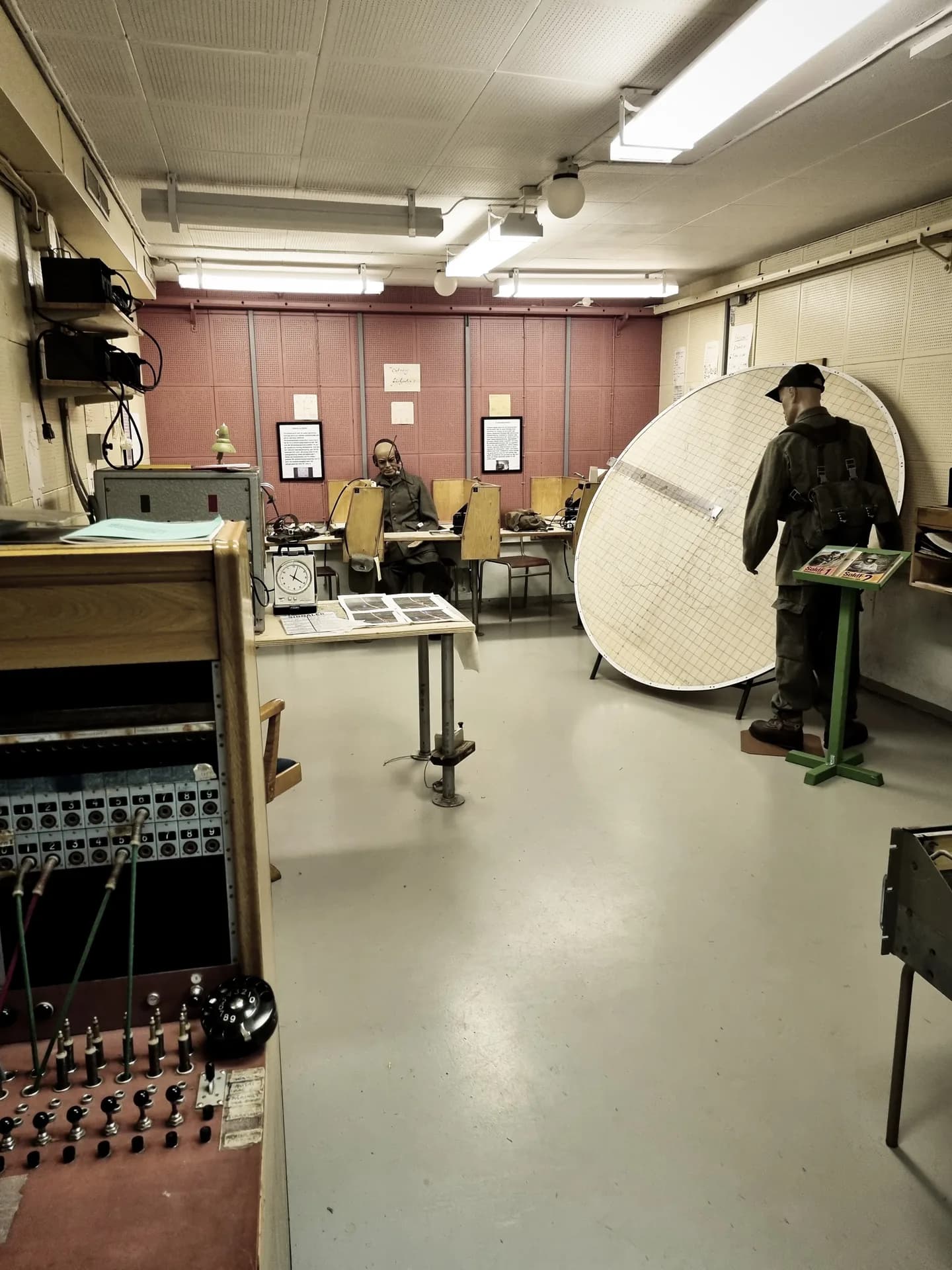
Das Museum führt Stig ein, einen KI-gesteuerten Guide-Charakter — eines der ersten KI-integrierten Museumserlebnisse in Skandinavien.
QUERSCHNITT DER FESTUNG
4 UNDERGROUND LEVELS — 40 METERS INTO THE MOUNTAIN